Table of Contents
- What is Bank of India Home Loan Eligibility Calculator?
- Bank of India Home Loan Eligibility Criteria 2026
- Factors Affecting Bank of India Home Loan Eligibility
- How to Use Bank of India Home Loan Eligibility Calculator
- Bank of India Home Loan Eligibility Based on Salary
- How Much Home Loan Can a Borrower Get on ₹50,000 Salary?
- How Much Home Loan Can a Borrower Get on ₹1 Lakh Salary?
- Bank of India Home Loan Eligibility for Salaried Employees
- Bank of India Home Loan Eligibility for Self‑Employed App...
- Bank of India Home Loan Eligibility with Existing EMI
- Bank of India Home Loan Eligibility with Co‑Applicant
- How Bank of India Calculates Home Loan Eligibility
- Documents Required for Bank of India Home Loan Eligibilit...
- Tips to Improve Bank of India Home Loan Eligibility
- Common Reasons for Home Loan Rejection
- Bank of India vs SBI vs HDFC vs ICICI Home Loan Eligibility
- Why Use BankerMart Home Loan Eligibility Calculator?
- FAQs about Bank of India Home Loan Eligibility Calculator...
- Conclusion
Buying a home is one of the most significant financial milestones in a person's life. In India, where property prices in metropolitan cities continue to rise, very few people can afford to purchase a home without external financial support. This is where home loans become essential. However, before a borrower starts visiting bank branches or filling out lengthy application forms, there is one crucial step that can save time, effort, and potential disappointment: checking loan eligibility.
Many home loan applicants make the mistake of applying without first understanding how much they can actually borrow. This often results in rejection, which not only wastes valuable time but also leaves a negative mark on the applicant's credit report. The smarter approach is to begin the home loan journey by using an eligibility calculator. This simple yet powerful tool gives a clear picture of borrowing capacity before the borrower even approaches a lender.
In this detailed guide, we will walk through everything a borrower needs to know about the Bank of India Home Loan Eligibility Calculator 2026. The guide covers the eligibility criteria, factors that affect the loan amount, salary-wise calculations, document requirements, and practical tips to improve the chances of approval. Real-world examples, a comparison with other banks, and answers to frequently asked questions are also included. Whether the borrower is a salaried employee, a self-employed professional, or someone looking to transfer an existing loan, this article will help them make an informed borrowing decision.
What is Bank of India Home Loan Eligibility Calculator?
A home loan eligibility calculator is an online tool that helps estimate the maximum loan amount a borrower can obtain from a bank based on their financial profile. The Bank of India Home Loan Eligibility Calculator specifically evaluates the applicant's income, existing financial obligations, age, and other factors to determine borrowing capacity.
Purpose and Benefits
The primary purpose of this calculator is to give a realistic estimate of how much loan a borrower can get before formally applying. This helps in planning the property purchase better. Instead of setting one's heart on a home that is beyond budget, the borrower can narrow down the search to properties that fall within the affordable range.
Key benefits of using the eligibility calculator:
Saves time and effort – Instant results are available without visiting a branch or submitting documents.
Prevents loan rejection – Knowing eligibility upfront reduces the risk of application rejection.
Helps with financial planning – The borrower can plan the down payment and monthly budget more effectively.
No impact on credit score – Using the calculator does not affect the CIBIL score.
Free to use – The calculator can be used as many times as needed at no cost.
How Does It Work?
The calculator uses a standard formula that most banks follow. It takes the applicant's monthly income, deducts existing monthly obligations (like car loans, personal loans, or credit card payments), and then applies a percentage to determine the maximum EMI the borrower can afford. Based on that EMI, the loan tenure, and the prevailing interest rate, it calculates the total loan amount for which the applicant is eligible.
The borrower can also adjust the inputs — try different tenures, add a co‑applicant, or see how paying off an existing loan changes the eligibility. The tool is user‑friendly and provides instant results, making it accessible to both salaried and self‑employed individuals.
Bank of India Home Loan Eligibility Criteria 2026
Before using the eligibility calculator, it helps to understand the basic criteria that Bank of India looks for in a home loan applicant. These are the minimum requirements that must be met to be considered for a home loan. Meeting these criteria does not guarantee approval, but failing to meet them almost certainly leads to rejection.
Here is a detailed overview of the eligibility criteria for Bank of India home loans in 2026:
| Parameter | Requirement |
|---|---|
| Minimum Age | 18 years |
| Maximum Age | 70 years at loan maturity |
| Nationality | Indian residents, PIOs, and NRIs |
| Employment Type | Salaried (private, PSU, government) or Self‑employed |
| Minimum Income (Salaried) | Varies by city and loan amount (typically ₹15,000–₹25,000/month) |
| Minimum Income (Self‑employed) | Annual income of at least ₹1.2–₹2 lakhs |
| Credit Score | Minimum 675; preferably 750+ for best rates |
| Work Experience (Salaried) | Minimum 1–3 years of continuous service |
| Business Vintage (Self‑employed) | Minimum 3 years in business |
| Maximum Loan Tenure | Up to 30 years |
| Maximum Loan Amount | Up to ₹5 crore |
| Property Type | Residential property (ready‑to‑move‑in, under construction, or plot with construction) |
| Loan‑to‑Value Ratio | Up to 90% of property value |
Important Notes on Eligibility
Age consideration: The maximum age limit is typically 70 years at the time of loan maturity. This means if an applicant is 45 years old, they may get a tenure of up to 25 years (70 minus 45). Younger applicants generally get longer tenures.
Credit score impact: Bank of India generally prefers a CIBIL score of 750 or above for home loan applicants. Scores between 675 and 749 may still qualify but could attract higher interest rates. For the absolute lowest rate of 7.10%, the bank may require an excellent CIBIL score of 840 or more.
Women borrowers: The bank offers concessional interest rates for women borrowers, typically 0.05% to 0.10% lower than standard rates.
Co‑applicant benefit: The income of a close relative who is a co‑applicant can be considered to enhance loan eligibility.
Factors Affecting Bank of India Home Loan Eligibility
Loan eligibility is not determined by a single factor. Bank of India, like all lenders, evaluates multiple aspects of the applicant's financial profile before arriving at a loan amount. Understanding these factors can help borrowers improve their eligibility.
1. Age
The borrower's age at the time of application and at loan maturity plays a significant role. Younger applicants generally get longer tenures because they have more working years ahead. Older applicants may get shorter tenures, which increases the EMI but reduces the total interest paid. The maximum age for loan repayment is 70 years.
2. Monthly Income
This is the most critical factor. Gross monthly income determines how much EMI the borrower can afford. Banks typically allow 40% to 55% of the monthly income to go towards EMI payments, depending on existing obligations. Higher income generally translates to higher loan eligibility.
3. Existing EMIs
If the borrower already has other loans — car loan, personal loan, education loan — the repayment capacity reduces. Banks calculate the Fixed Obligation to Income Ratio (FOIR). If existing EMIs are high, the home loan eligibility will drop significantly.
4. Credit Score
The CIBIL score reflects the borrower's creditworthiness. A high score (750+) signals to the bank that the borrower is a responsible borrower. This can increase eligibility and also secure a lower interest rate. The bank generally prefers a CIBIL score of 750 or above for the best chances of approval and favourable interest rates.
5. Employment Type
Salaried employees with stable jobs are generally viewed more favourably than self‑employed applicants. The bank requires at least 1–3 years of continuous service for salaried employees and 3+ years of business vintage for self‑employed individuals.
6. Loan Tenure
Longer tenures reduce the EMI amount, which can increase eligibility. However, longer tenures also mean the borrower pays more interest over the life of the loan. The calculator allows experimenting with different tenures to find the right balance. The maximum tenure is 30 years.
7. Property Value
The loan‑to‑value (LTV) ratio determines how much of the property value the bank will finance. For loans up to ₹30 lakh, Bank of India can finance up to 90% of the property value. For loans between ₹30 lakh and ₹75 lakh, the LTV is around 80%. For loans above ₹75 lakh, it drops to 75%.
8. Co‑Applicant Income
Adding a co‑applicant (spouse, parent, or sibling) with a stable income can significantly boost eligibility. The bank considers the combined income of all applicants, which increases the loan amount that can be borrowed.
How to Use Bank of India Home Loan Eligibility Calculator
Using the eligibility calculator is straightforward. Follow these steps to get an estimate of borrowing capacity:
Visit the BankerMart home loan eligibility calculator page or the Bank of India website.
Enter the monthly gross income. If there is a co‑applicant, add their income as well.
Enter existing monthly obligations — this includes EMIs for any current loans, credit card dues, and other fixed monthly payments.
Select the age and the preferred loan tenure (up to 30 years).
Enter the interest rate. The current starting rate of 7.10% can be used as a baseline.
Click on Calculate. The tool will show the maximum loan amount the applicant is eligible for, along with the estimated EMI.
Some calculators also show a detailed break‑up of how the loan amount was derived. This transparency helps the borrower understand where they stand and what changes they can make to improve eligibility.
Bank of India Home Loan Eligibility Based on Salary
One of the most common questions borrowers ask is, \"How much home loan can I get on my salary?\" The answer depends on monthly income, existing obligations, and the chosen tenure.
Below is a detailed salary‑wise eligibility table for Bank of India home loans in 2026. These figures are estimates based on the following assumptions:
Interest rate: 8.45% per annum (as per BankBazaar data)
Maximum tenure: 30 years
FOIR (Fixed Obligation to Income Ratio): 40%
No existing EMIs
| Monthly Salary (₹) | Estimated Eligible Loan Amount (₹) | Estimated Monthly EMI (₹) |
|---|---|---|
| 25,000 | 15,26,114 | 11,500 |
| 30,000 | 20,60,253 | 15,500 |
| 35,000 | 24,03,629 | 18,100 |
| 40,000 | 27,47,004 | 20,700 |
| 45,000 | 30,90,380 | 23,300 |
| 50,000 | 34,33,756 | 25,900 |
| 55,000 | 41,96,812 | 31,600 |
| 60,000 | 45,78,341 | 34,500 |
| 65,000 | 49,59,869 | 37,400 |
| 70,000 | 53,41,398 | 40,300 |
| 75,000 | 57,22,926 | 43,100 |
Note: These figures are indicative and based on certain assumptions. Actual eligibility may vary based on credit score, existing obligations, property value, and other factors.
If the borrower has existing EMIs, their eligibility will be lower. For example, if an applicant earns ₹75,000 but has a car loan EMI of ₹10,000, the effective income for the home loan calculation drops to ₹65,000, reducing eligibility accordingly.
How Much Home Loan Can a Borrower Get on ₹50,000 Salary?
Let's take a detailed example to understand how much home loan a borrower can get on a ₹50,000 monthly salary.
Example Scenario:
Monthly gross salary: ₹50,000
No existing EMIs
Age: 30 years
Preferred tenure: 30 years
Interest rate: 8.45% p.a.
Calculation:
Maximum EMI capacity (50% of income): ₹25,000
At 8.45% interest for 30 years, an EMI of ₹25,000 translates to a loan amount of approximately ₹34 lakh.
What if the borrower has existing EMIs?
If the borrower has an existing car loan EMI of ₹8,000:
Effective income for calculation: ₹50,000 – ₹8,000 = ₹42,000
Maximum EMI capacity: ₹21,000
Eligible loan amount: approximately ₹28 lakh
What if the borrower adds a co‑applicant?
If the spouse earns ₹40,000 and has no existing EMIs:
Combined income: ₹90,000
Maximum EMI capacity: ₹45,000
Eligible loan amount: approximately ₹61 lakh
How Much Home Loan Can a Borrower Get on ₹1 Lakh Salary?
Example Scenario:
Monthly gross salary: ₹1,00,000
No existing EMIs
Age: 35 years
Preferred tenure: 30 years
Interest rate: 8.45% p.a.
Calculation:
Maximum EMI capacity (50% of income): ₹50,000
At 8.45% interest for 30 years, an EMI of ₹50,000 translates to a loan amount of approximately ₹68–75 lakh.
What if the borrower has existing EMIs?
If the borrower has an existing car loan EMI of ₹15,000 and a personal loan EMI of ₹10,000:
Total existing EMI: ₹25,000
Effective income for calculation: ₹1,00,000 – ₹25,000 = ₹75,000
Maximum EMI capacity: ₹37,500
Eligible loan amount: approximately ₹51 lakh
What if the borrower adds a co‑applicant?
If the spouse earns ₹60,000 and has no existing EMIs:
Combined income: ₹1,60,000
Maximum EMI capacity: ₹80,000
Eligible loan amount: approximately ₹1.10–1.20 crore
Bank of India Home Loan Eligibility for Salaried Employees
Salaried employees form the largest group of home loan borrowers in India. Bank of India has specific guidelines for this category.
Key Requirements for Salaried Applicants
Employment stability: The applicant should have at least 1–3 years of continuous employment with the current employer or in the same industry.
Income proof: Salary slips for the last 6 months, bank statements showing salary credits, and Form 16 are mandatory.
Company profile: Employees of government departments, PSUs, MNCs, and reputed private companies are viewed more favourably.
How Eligibility is Calculated for Salaried Employees
The bank typically uses the following formula:
Monthly gross income minus existing EMIs = Net disposable income
40% to 50% of this net income is considered as the maximum EMI capacity
Based on this EMI, the loan amount is calculated using the standard EMI formula
For example, if the monthly gross income is ₹80,000 and there are no existing loans, the maximum EMI capacity would be around ₹40,000. At an interest rate of 8.45% and a tenure of 30 years, this translates to a loan of approximately ₹54–58 lakh.
Minimum Loan Amount: For salaried individuals, the minimum loan amount is ₹5 lakh.
Bank of India Home Loan Eligibility for Self‑Employed Applicants
Self‑employed individuals — business owners, freelancers, consultants, and professionals — face different eligibility criteria compared to salaried employees. The bank assesses income based on business turnover, profits, and tax returns.
Key Requirements for Self‑Employed Applicants
Business vintage: The applicant should have at least 3 years of experience in their current business or profession.
Income proof: Income tax returns for the last 3 years, profit and loss statements, balance sheets, and bank statements showing business transactions.
Business stability: Banks prefer businesses that show consistent or growing profits. Sudden drops in income can raise red flags.
How Eligibility is Calculated for Self‑Employed Applicants
Instead of monthly salary slips, the bank looks at the applicant's annual income as per the ITR. They typically take the average of the last 2–3 years' income. The rest of the calculation — FOIR, EMI capacity, and loan amount — follows the same logic as for salaried employees.
Minimum Loan Amount: For self‑employed individuals, the minimum loan amount is ₹10 lakh.
Key Difference: Self‑employed applicants may be offered slightly higher interest rates or shorter tenures compared to salaried applicants, depending on the perceived risk.
Bank of India Home Loan Eligibility with Existing EMI
If the applicant already has existing loans, their home loan eligibility will be affected. Here's how it works:
Understanding FOIR
Banks use the Fixed Obligation to Income Ratio (FOIR) to assess the applicant's repayment capacity. FOIR is the percentage of the monthly income that goes towards fixed obligations (EMIs).
Example Calculation:
Monthly income: ₹75,000
Existing car loan EMI: ₹10,000
Existing personal loan EMI: ₹5,000
Total existing EMIs: ₹15,000
FOIR: 15,000 / 75,000 = 20%
For home loan calculation, the bank considers:
Effective income for home loan: ₹75,000 – ₹15,000 = ₹60,000
Maximum EMI capacity (50% of effective income): ₹30,000
Eligible home loan amount: approximately ₹41 lakh
Tip: Before applying for a home loan, borrowers should consider paying off smaller existing loans. This can significantly increase home loan eligibility.
Bank of India Home Loan Eligibility with Co‑Applicant
Adding a co‑applicant is one of the most effective ways to increase home loan eligibility.
Who Can Be a Co‑Applicant?
Spouse
Parents
Adult children
Siblings (in some cases)
How Co‑Applicant Income Helps
The bank considers the combined income of all applicants, which increases the total loan amount that can be borrowed.
Example:
Primary applicant income: ₹60,000
Co‑applicant income: ₹40,000
Combined income: ₹1,00,000
Maximum EMI capacity: ₹50,000
Eligible loan amount: approximately ₹68–75 lakh (instead of ₹41 lakh alone)
Additional Benefits of Adding a Co‑Applicant
Tax benefits: Both applicants can claim tax deductions on the loan.
Better interest rates: Combined income may qualify for better rates.
Property ownership: Both applicants become co‑owners of the property.
How Bank of India Calculates Home Loan Eligibility
Understanding the calculation methodology can help applicants estimate their eligibility even without a calculator.
The EMI Formula
The Equated Monthly Installment (EMI) is calculated using this formula:
EMI = P × r × (1+r)^n / ((1+r)^n – 1)
Where:
P = Loan amount
r = Monthly interest rate (annual rate ÷ 12)
n = Number of monthly installments
How Eligibility is Derived
The bank first calculates the net monthly income (gross income minus existing EMIs).
It then applies the FOIR (typically 40% to 55%) to arrive at the maximum EMI capacity.
Using the EMI formula, the bank works backwards to determine the maximum loan amount that can be serviced with that EMI, given the tenure and interest rate.
Example:
If the maximum EMI capacity is ₹30,000, the interest rate is 8.45%, and the tenure is 25 years, the maximum loan amount would be approximately ₹39–42 lakh.
Factors Considered in the Assessment
Income stability: Regular and consistent income is preferred.
Employment/business continuity: Longer work history improves eligibility.
Age: Younger applicants get longer tenures.
Credit history: Clean repayment record is essential.
Property value: LTV ratio affects the final loan amount.
Documents Required for Bank of India Home Loan Eligibility Assessment
Before the loan application can be processed, the borrower needs to submit a set of documents. Having these ready in advance can speed up the process significantly.
| Document Category | Salaried Applicants | Self‑Employed Applicants |
|---|---|---|
| Identity Proof | PAN Card, Aadhaar Card, Voter ID, Passport | PAN Card, Aadhaar Card, Voter ID, Passport |
| Address Proof | Aadhaar, Passport, Utility bills | Aadhaar, Passport, Utility bills, Trade license |
| Income Proof | Salary slips (last 6 months), Form 16 | ITR (last 3 years), Profit & Loss statement, Balance sheet |
| Bank Statements | Last 6 months (salary credited account) | Last 6 months (operative account) |
| Employment Proof | Employment letter, Appointment letter | Business registration, GST certificate |
| Property Documents | Sale agreement, Title deed, Approved building plan | Sale agreement, Title deed, Approved building plan |
| Other Documents | Passport‑size photographs, Loan application form | Passport‑size photographs, Loan application form |
Tips to Improve Bank of India Home Loan Eligibility
If the eligibility is lower than what the borrower needs, there are several practical steps that can be taken to improve borrowing capacity.
1. Improve the Credit Score
A higher credit score not only increases eligibility but also secures a better interest rate.
Pay all EMIs and credit card bills on time.
Keep credit utilisation below 30% of the limit.
Check the credit report regularly for errors and get them corrected.
2. Add a Co‑Applicant
Adding a co‑applicant with a stable income can significantly boost eligibility.
Spouses, parents, or adult children can be co‑applicants.
The combined income of all applicants is considered for loan calculation.
3. Reduce Existing Liabilities
If there are other loans, paying them off before applying for a home loan is advisable.
This reduces the FOIR and increases the amount that can be borrowed.
Even prepaying a small loan can make a difference.
4. Choose a Longer Tenure
A longer tenure reduces the EMI, which can increase eligibility.
While this means paying more interest overall, it can help qualify for a larger loan amount.
The maximum tenure is 30 years.
5. Opt for a Joint Loan with Spouse
If both spouses are working, applying for a joint loan combines both incomes.
This can double eligibility.
It also provides tax benefits.
6. Consider a Smaller Loan Amount
If the eligibility is not enough for the dream home, looking at slightly smaller properties is a prudent choice.
It is better to buy a home within means than to stretch finances and risk default.
7. Choose a Property Within the Approved List
Bank of India has a list of approved projects and locations.
Choosing a property from this list can speed up approval.
Some properties may have higher LTV ratios.
Common Reasons for Home Loan Rejection
Understanding why loans get rejected can help borrowers avoid common pitfalls. Here are the top reasons Bank of India and other lenders reject home loan applications:
Low Credit Score – A CIBIL score below 675 is a major red flag. It signals a history of defaults or late payments. A score below 650 is particularly problematic.
Insufficient Income – If the income is not enough to service the EMI, the bank will reject the application. This is why using an eligibility calculator before applying is so important.
High Existing Debt – If existing EMIs already consume a large portion of the income, the bank will consider the applicant over‑leveraged and reject the application.
Unstable Employment or Business – Frequent job changes, gaps in employment, or a business that is less than 3 years old can lead to rejection.
Property Issues – If the property has legal disputes, unclear title, or does not meet the bank's approval criteria, the loan will not be sanctioned.
Incomplete Documentation – Missing or incorrect documents are one of the most common reasons for delays and rejections. Applicants should double‑check their document list before submitting.
Age Issues – If the applicant is close to retirement age and the loan tenure extends beyond retirement, the bank may reject the application unless there is a co‑applicant.
Bank of India vs SBI vs HDFC vs ICICI Home Loan Eligibility
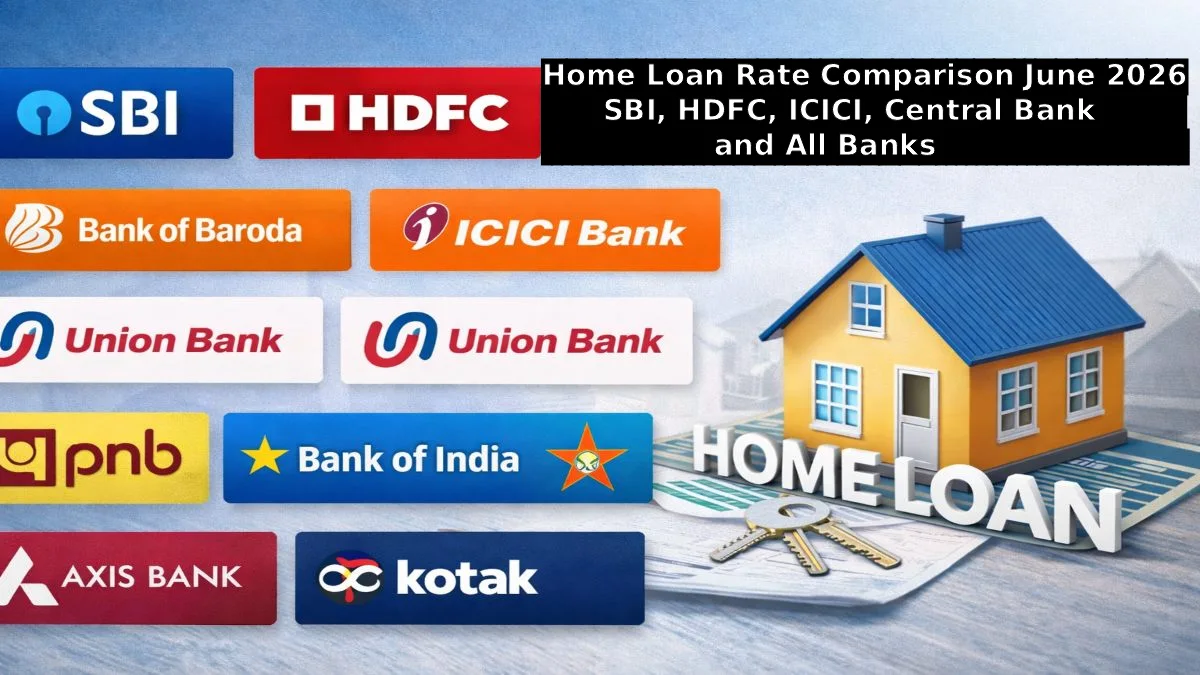
Bank of India is one of the most competitive public sector banks when it comes to home loans. Here is how it compares with other major lenders in 2026:
| Bank | Interest Rate (Starting) | Maximum Tenure | Processing Fee | Key Eligibility Notes |
|---|---|---|---|---|
| Bank of India | 7.10% | 30 years | ₹1,500 – 0.50% | Age 18–70; CIBIL 675+ |
| SBI | 7.25% | 30 years | ₹2,000 – 0.35% | Age 18–70; CIBIL 750+ for best rates |
| HDFC Bank | 7.90% | 30 years | Up to 0.50% | Stricter income criteria for self‑employed |
| ICICI Bank | 7.70% | 30 years | Up to 0.50% | Better rates for existing customers |
| Canara Bank | 7.15% | 30 years | Up to 0.50% | Age 21–70; CIBIL 650+ |
| PNB | 7.30% | 30 years | Up to 0.35% | Similar to Bank of India |
Key Takeaways from the Comparison
Bank of India offers one of the lowest starting interest rates among public sector banks at 7.10%, tied with Bank of Maharashtra and Central Bank of India.
Processing fees are competitive – Bank of India charges ₹1,500 to 0.50% of the loan amount, which is among the lowest in the market.
Maximum tenure is 30 years for all major banks.
Credit score requirements – While Bank of India accepts scores as low as 675, the best rates require 750+ for most banks.
Why Use BankerMart Home Loan Eligibility Calculator?
While eligibility calculators are available on many websites, BankerMart offers a superior experience. Here is why borrowers should use the BankerMart tool:
Comprehensive and Up‑to‑Date – The calculator uses the latest interest rates and eligibility norms for 2026, ensuring accurate results.
User‑Friendly Interface – No financial expertise is required. The inputs are simple, and the results are presented in an easy‑to‑understand format.
Comparison Feature – Unlike many calculators that only show results for one bank, BankerMart allows comparison of eligibility across multiple lenders. This helps borrowers find the best deal.
Instant Results – Eligibility estimates are provided in seconds. No waiting, no phone calls, no branch visits.
Privacy First – Personal data is not stored. Income and other details are used only for the calculation and are not shared with any third party.
Expert Guidance – After receiving results, borrowers can connect with loan experts for personalised advice. These experts can help understand options and guide through the application process.
FAQs about Bank of India Home Loan Eligibility Calculator 2026
What is the minimum CIBIL score required for a Bank of India home loan?
The minimum credit score required is 675, but a score above 750 is recommended for the best interest rates.Can a self‑employed individual get a Bank of India home loan?
Yes, self‑employed individuals can apply. They need to have at least 3 years of business experience and provide ITR and other income proofs.What is the maximum loan tenure offered by Bank of India?
Bank of India offers home loan tenures of up to 30 years.Is there any processing fee for Bank of India home loans?
Bank of India charges a processing fee of up to 0.25% of the loan amount, with a minimum of ₹1,500 and a maximum of ₹20,000.How much home loan can one get on a ₹50,000 salary?
On a ₹50,000 salary with no existing EMIs, the borrower may be eligible for a loan of approximately ₹34 lakh with a 30‑year tenure at 8.45% interest.Can a co‑applicant be added to increase eligibility?
Yes, adding a co‑applicant with a stable income can significantly increase loan eligibility. Spouses, parents, and adult children can be co‑applicants.What is the age limit for Bank of India home loan applicants?
The minimum age is 18 years, and the maximum age at loan maturity is 70 years.Does Bank of India offer home loans for property purchase outside India?
No, Bank of India home loans are only for properties located in India.What is the FOIR used by Bank of India for home loans?
Bank of India typically uses a FOIR of 40% to 55% of the gross monthly income, depending on the applicant's profile and existing obligations.Can a borrower prepay a Bank of India home loan without charges?
Yes, as per RBI guidelines, there are no prepayment or foreclosure charges on floating‑rate home loans. For fixed‑rate loans, charges may apply.How long does it take for Bank of India to approve a home loan?
The approval process typically takes 5 to 15 working days, depending on the completeness of documents and the property verification process.What documents are required for a Bank of India home loan?
The borrower needs identity proof, address proof, income proof (salary slips or ITR), bank statements, property documents, and employment/business proof.Can NRIs apply for a Bank of India home loan?
Yes, NRIs are eligible for Bank of India home loans, subject to specific residency and income criteria.Does Bank of India offer better rates for women borrowers?
Yes, Bank of India offers concessional interest rates for women borrowers, typically 0.05% to 0.10% lower.What happens if a home loan application is rejected?
If the application is rejected, the borrower should find out the reason from the bank. They should work on improving that aspect — whether it is credit score, income proof, or property documents — and reapply after a few months.Can an existing home loan be transferred to Bank of India?
Yes, Bank of India offers balance transfer facilities with competitive interest rates and nil prepayment charges on floating‑rate loans.What is the maximum loan amount Bank of India offers?
The maximum loan amount is up to ₹5 crore, depending on income, property value, and repayment capacity.Does Bank of India offer home loans for under‑construction properties?
Yes, Bank of India provides home loans for under‑construction properties. The disbursement is linked to the construction progress.Can a Bank of India home loan be applied for online?
Yes, applications can be submitted online through the Bank of India website or through partner platforms like BankerMart.How is the home loan eligibility calculated?
Eligibility is calculated based on monthly income, existing EMIs, age, loan tenure, and the prevailing interest rate. The bank uses the FOIR method to determine the EMI capacity and then derives the loan amount.
Conclusion
Checking home loan eligibility before starting house hunting is one of the smartest financial decisions a borrower can make. It saves time, prevents disappointment, and helps in planning the budget realistically. The Bank of India Home Loan Eligibility Calculator 2026 is a powerful tool that gives a clear picture of borrowing capacity in just a few clicks.
Bank of India offers competitive interest rates starting at 7.10%, flexible tenures up to 30 years, and reasonable processing fees, making it an attractive option for home buyers. Whether the borrower is a salaried employee, a self‑employed professional, or an NRI, understanding their eligibility is the first step towards owning a dream home.
Borrowers are encouraged to use the BankerMart home loan eligibility calculator today. It is free, fast, and completely confidential. Once an eligibility estimate is obtained, borrowers can compare offers from multiple lenders, choose the one that suits them best, and start the home buying journey with confidence.
A home loan is a long‑term commitment. Taking the time to understand finances, improve credit score if needed, and choose a loan that fits comfortably within the budget is essential. Happy house hunting!