Table of Contents
- SBI Home Loan Interest Rate for Women 2026
- Does SBI Offer Special Interest Rate Benefits to Women?
- SBI Home Loan EMI Calculator for Women
- SBI Home Loan Eligibility for Women
- Documents Required for SBI Home Loan for Women
- SBI Home Loan Tax Benefits for Women
- SBI Home Loan Processing Fees and Charges
- SBI Home Loan Benefits for Working Women
- SBI Home Loan for Housewives
- SBI Home Loan Women Co-Applicant Benefits
- SBI vs HDFC vs ICICI vs PNB Home Loan for Women
- How Women Can Get the Lowest SBI Home Loan Interest Rate
- SBI Home Loan for Women: Advantages and Disadvantages
- Who Should Apply for SBI Home Loan for Women?
- Frequently Asked Questions
- Conclusion
Buying a home is one of the most significant financial decisions a woman can make, and State Bank of India has consistently stood as a trusted partner in this journey. The year 2026 brings encouraging news for women homebuyers across the country. SBI continues to offer attractive interest rates with a special concession exclusively for women applicants, making homeownership more affordable and accessible than ever before.
The SBI home loan interest rate for women 2026 starts from 7.25% per annum, with an additional 0.05% concession (5 basis points) for women borrowers. This means women can avail home loans at rates as low as 7.20% per annum, depending on their credit profile, loan amount, and other eligibility factors. With the RBI repo rate currently at 5.25% and SBI's External Benchmark Lending Rate (EBLR) reflecting supportive monetary conditions, women borrowers are in an excellent position to secure affordable home financing.
But the benefits don't stop at interest rates. Women borrowers also enjoy stamp duty concessions in many states, priority under the Pradhan Mantri Awas Yojana (PMAY), and significant tax advantages under the Income Tax Act. Whether you are a salaried professional, a businesswoman, a doctor, a teacher, or a first-time homebuyer, SBI has structured its home loan products to make your journey smoother.
In this comprehensive guide, we will walk you through everything you need to know about the SBI home loan interest rate for women in 2026. From the exact concession percentages and EMI calculations to eligibility criteria, documentation requirements, tax benefits, and a detailed comparison with other leading banks, this article covers it all. We will also share practical tips to help you secure the lowest possible rate and make the most of your home loan journey.
Let us begin by understanding the current interest rate structure designed specifically for women borrowers.
SBI Home Loan Interest Rate for Women 2026
State Bank of India offers one of the most attractive home loan interest rate structures in the country, and women borrowers receive an additional advantage. The SBI home loan interest rate for women 2026 starts from 7.25% per annum for eligible borrowers. This rate is linked to the External Benchmark Lending Rate (EBLR), which is reviewed periodically based on the RBI repo rate movements.
Here is a detailed breakdown of the SBI home loan interest rate for women 2026:
Understanding the Interest Rate Components
The SBI home loan interest rate is determined through a transparent formula-driven system:
Final Interest Rate = EBLR + Credit Risk Spread
The External Benchmark Lending Rate (EBLR) is derived from the RBI repo rate plus SBI's internal spread (approximately 2.25% to 2.65%). On top of this, SBI adds a Credit Risk Spread based on your CIBIL score, income stability, employment type, and loan amount. Women borrowers get a 0.05% concession on the final applicable rate.
Loan Amount Slabs and Corresponding Rates
SBI offers different rate brackets based on the loan amount:
| Loan Amount Slab | Regular Rate (% p.a.) | Women's Rate (% p.a.) | EMI per ₹1 Lakh @ 20 Yrs |
|---|---|---|---|
| Up to ₹30 Lakh | 8.25% – 8.50% | 8.20% – 8.45% | ₹862 |
| ₹30 Lakh – ₹75 Lakh | 8.50% – 8.75% | 8.45% – 8.70% | ₹877 |
| Above ₹75 Lakh | 8.60% – 8.85% | 8.55% – 8.80% | ₹884 |
Note: Rates are EBLR-linked and reviewed quarterly. Please check sbi.co.in for the most current rates.
Processing Fee Explained
The processing fee for SBI home loans is quite reasonable compared to many private sector banks. It is calculated as 0.35% of the loan amount:
Minimum: ₹2,000 + applicable GST
Maximum: ₹10,000 + applicable GST
For example, if you are taking a loan of ₹50 lakh, the processing fee would be approximately ₹17,500 plus GST. However, the maximum cap of ₹10,000 plus GST means that for larger loan amounts, you effectively pay a lower percentage.
Loan Tenure Flexibility
SBI offers repayment tenures of up to 30 years, giving you the flexibility to choose a tenure that suits your monthly budget. A longer tenure means lower EMIs but higher total interest paid over the loan's life. Conversely, a shorter tenure means higher EMIs but significant savings on total interest.
EMI Impact of the Women Concession
The 0.05% concession might seem small at first glance, but over a 30-year loan tenure, it can translate into substantial savings. For instance, on a ₹50 lakh loan at 8.45% interest rate for 30 years, women borrowers can save about ₹63,632 in total interest cost.
This is the power of the SBI home loan interest rate for women 2026 — a small percentage point difference that makes a meaningful impact on your financial life.
Does SBI Offer Special Interest Rate Benefits to Women?
Yes, absolutely. State Bank of India provides dedicated interest rate benefits exclusively for women borrowers. Let us understand these benefits in detail.
Women Borrower Concession
SBI offers a 0.05% interest rate concession (5 basis points) to women who are the primary applicants on a home loan. This concession is applied to the final applicable interest rate, subject to the minimum EBLR.
Who qualifies for this concession?:
| Scenario | Concession Available? | Why? |
|---|---|---|
| Woman is the sole applicant | ✅ Yes | She meets all requirements as the 100% owner and primary borrower |
| Woman is the first/primary applicant, man is co-applicant | ✅ Yes | Her name appears first on loan documents, enabling safe income pooling |
| Man is the first applicant, woman is the co-applicant only | ❌ No | The primary borrower is male, which does not qualify for the women's concession |
This means that to avail of the SBI home loan women concession, the woman must be the primary borrower or the first applicant on the loan application.
Female Co-Applicant Advantages
Having a female co-applicant on a home loan comes with several advantages:
Higher Loan Eligibility: When a woman is a co-applicant, the combined income of both applicants is considered, potentially increasing the loan amount you qualify for.
Better Approval Chances: Dual-income households are viewed as lower risk by lenders, improving your chances of loan approval.
Shared Financial Responsibility: With two applicants, the EMI burden is shared, making repayment more manageable.
Combined Tax Benefits: Both co-applicants can claim tax deductions separately, maximizing overall tax savings.
Property Ownership Benefits
Many state governments offer reduced stamp duty charges for properties registered in a woman's name. States like Uttar Pradesh, Haryana, Maharashtra, and Delhi levy 1% to 2% lower stamp duty on such properties compared to those registered in a man's name.
For example, a woman borrower from Delhi can get a concession of up to ₹1 lakh on the stamp duty for a property valued at ₹50 lakh.
Long-Term EMI Savings
The combination of the 0.05% interest concession and reduced stamp duty can result in significant long-term savings. Here is a practical example:
Example: Priya takes a home loan of ₹50 lakh from SBI at a rate of 8.45% for 30 years.
Without women concession: Total interest paid over 30 years = approximately ₹8.75 lakh
With women concession (8.40%): Total interest paid over 30 years = approximately ₹8.68 lakh
Total savings from interest concession alone: ₹63,632
Add to this the stamp duty savings of up to ₹1 lakh, and Priya saves nearly ₹1.64 lakh in total — a substantial amount that can be used for furnishing her new home or other expenses.
SBI Home Loan EMI Calculator for Women
One of the most compelling reasons to choose SBI as a woman borrower is the tangible EMI savings you can enjoy. Let us look at detailed EMI comparisons across different loan amounts to understand the real impact of the women concession.
For these calculations, we have assumed a 20-year loan tenure and an average regular rate of 8.50% with a women's concession rate of 8.45%.
₹20 Lakh Loan
| Parameter | Regular Rate (8.50%) | Women's Rate (8.45%) | Savings |
|---|---|---|---|
| Monthly EMI | ₹17,366 | ₹17,318 | ₹48 |
| Total Interest Paid (20 years) | ₹16,67,733 | ₹16,56,213 | ₹11,520 |
| Total Payment (Principal + Interest) | ₹36,67,733 | ₹36,56,213 | ₹11,520 |
While the monthly savings might seem modest, over 20 years, you save more than ₹11,000 — money that can go towards your home maintenance or other expenses.
₹30 Lakh Loan
| Parameter | Regular Rate (8.50%) | Women's Rate (8.45%) | Savings |
|---|---|---|---|
| Monthly EMI | ₹26,049 | ₹25,977 | ₹72 |
| Total Interest Paid (20 years) | ₹25,01,599 | ₹24,84,319 | ₹17,280 |
| Total Payment (Principal + Interest) | ₹55,01,599 | ₹54,84,319 | ₹17,280 |
₹50 Lakh Loan
| Parameter | Regular Rate (8.50%) | Women's Rate (8.45%) | Savings |
|---|---|---|---|
| Monthly EMI | ₹43,415 | ₹43,295 | ₹120 |
| Total Interest Paid (20 years) | ₹41,69,332 | ₹41,40,532 | ₹28,800 |
| Total Payment (Principal + Interest) | ₹91,69,332 | ₹91,40,532 | ₹28,800 |
₹75 Lakh Loan
| Parameter | Regular Rate (8.50%) | Women's Rate (8.45%) | Savings |
|---|---|---|---|
| Monthly EMI | ₹65,122 | ₹64,942 | ₹180 |
| Total Interest Paid (20 years) | ₹62,53,998 | ₹62,10,798 | ₹43,200 |
| Total Payment (Principal + Interest) | ₹1,37,53,998 | ₹1,37,10,798 | ₹43,200 |
₹1 Crore Loan
| Parameter | Regular Rate (8.50%) | Women's Rate (8.45%) | Savings |
|---|---|---|---|
| Monthly EMI | ₹86,829 | ₹86,590 | ₹239 |
| Total Interest Paid (20 years) | ₹83,38,664 | ₹82,81,064 | ₹57,600 |
| Total Payment (Principal + Interest) | ₹1,83,38,664 | ₹1,82,81,064 | ₹57,600 |
Key Takeaways from the EMI Comparison
The savings scale with the loan amount: The larger your loan, the more you save from the women concession.
Monthly savings may seem small, but they add up: ₹239 per month on a ₹1 crore loan might not feel significant, but over 20 years, that is nearly ₹58,000 saved.
The real benefit is the reduced interest burden: The total interest savings are what truly matter. On a ₹1 crore loan, you save over ₹57,600 in interest payments.
Combine with other benefits for maximum impact: When you add stamp duty savings (up to ₹1 lakh) and PMAY subsidies (up to ₹1.80 lakh), the total savings become substantial.
Note: These calculations are indicative and based on assumed rates. Actual EMIs and savings will depend on your specific interest rate, loan tenure, and other factors.
SBI Home Loan Eligibility for Women
Understanding the eligibility criteria is crucial before applying for an SBI home loan. The bank has clear guidelines for different categories of women borrowers.
Quick Eligibility Overview
Age: 18 to 70 years at loan maturity
CIBIL Score: 750 or above preferred for competitive rates
Employment: Salaried, self-employed, professionals, businesswomen all eligible
Income: Varies by category and location
Property: Must meet SBI's legal and technical verification standards
Eligibility for Salaried Women
| Parameter | Details |
|---|---|
| Minimum Age | 18 years |
| Maximum Age at Maturity | 70 years |
| Minimum Monthly Income (Metro) | ₹25,000 |
| Minimum Monthly Income (Non-Metro) | ₹15,000 |
| CIBIL Score | 750 or above |
| Work Experience | 1–2 years |
| Maximum Tenure | 30 years |
Salaried women working in government or private sectors with a stable income and good credit history are ideal candidates for SBI home loans.
Eligibility for Self-Employed Women
| Parameter | Details |
|---|---|
| Minimum Age | 18 years |
| Maximum Age at Maturity | 70 years |
| Minimum Monthly Income (Metro) | ₹50,000 |
| Minimum Monthly Income (Non-Metro) | ₹25,000 |
| CIBIL Score | 750 or above |
| Business Vintage | Minimum 3 years |
| Maximum Tenure | 30 years |
Self-employed women, including businesswomen and professionals like doctors and chartered accountants, need to demonstrate consistent business continuity and income records.
Eligibility for Businesswomen
Businesswomen fall under the self-employed category. The key requirements are:
Minimum 3 years of business continuity
Stable income and profit records
Good repayment capacity
Business address proof and license details
Eligibility for Professionals (Doctors, CAs, Architects, etc.)
| Parameter | Details |
|---|---|
| Minimum Age | 18 years |
| Maximum Age at Maturity | 70 years |
| Minimum Monthly Income | ₹25,000 – ₹50,000 (depending on location) |
| CIBIL Score | 750 or above |
| Practice Vintage | Minimum 3 years |
| Documents | Qualification certificate, TDS certificate, IT returns |
Eligibility for First-Time Homebuyers
First-time homebuyers, including women buying their first home, are eligible for SBI home loans. In fact, they may qualify for additional benefits:
PMAY 2.0 Subsidy: Eligible borrowers can get subsidies of up to ₹1.80 lakh
Priority Sector Lending: First-time homebuyers in affordable housing segments get priority
Mandatory Female Co-Ownership: Under PMAY, female co-ownership is mandatory in certain categories
Eligibility for Housewives
Housewives can apply for SBI home loans as co-applicants with their spouses or family members. While they may not have independent income, their inclusion as a co-owner helps in availing stamp duty benefits and tax advantages. The primary applicant (earning member) must meet all income and eligibility criteria.
Age and Tenure Relationship
Your age at the time of application directly impacts the maximum loan tenure:
| Age of Applicant | Maximum Eligible Tenure |
|---|---|
| 30 years | 40 years (capped at 30 max tenure) |
| 40 years | 30 years |
| 50 years | 20 years |
| 55 years | 15 years |
Since most SBI home loans must be repaid before the borrower turns 70, younger applicants can avail longer tenures and lower EMIs.
Documents Required for SBI Home Loan for Women
Having your documents ready before applying can significantly speed up the loan approval process. Here is a comprehensive checklist of documents required for an SBI home loan for women:
Identity Proof (Any One)
Aadhaar Card
PAN Card
Voter ID Card
Passport
Driving License
Address Proof (Any One)
Aadhaar Card (if it has current address)
Passport
Voter ID Card
Utility Bills (electricity, water, gas) not older than 3 months
Rent Agreement
Bank Account Statement
Income Proof for Salaried Women
Income Proof for Self-Employed/Businesswomen
Property Documents
Title deed
Sale deed
Building plan approvals
Encumbrance certificate
Khata certificate
Completion certificate (for newly constructed property)
Commencement certificate (for under-construction property)
Conversion certificate
Latest tax receipts
Property occupancy certificate
NOC from the society (if applicable)
Employment Documents
Employment contract/offer letter
Experience certificate
Appointment letter
Photographs
Other Documents
Loan application form (duly filled and signed)
Documents Required at the Time of Property Possession
Original copies of title agreements
Building plan approval letter
Possession letter
Original receipts of stamp duty and registration
NOC from the society
Proof of payment of all outstanding dues including taxes till the date of possession
SBI Home Loan Tax Benefits for Women
One of the most significant advantages of taking a home loan is the tax benefits available under the Income Tax Act. As a woman borrower, you can claim these deductions, and if you have a co-applicant, the benefits can be doubled.
Section 80C – Deduction on Principal Repayment
Under Section 80C of the Income Tax Act, you can claim a deduction of up to ₹1.5 lakh per financial year on the principal amount repaid towards your home loan.
Eligibility: This deduction is available to both the borrower and co-borrower.
Example: If you and your husband are joint borrowers, both can claim up to ₹1.5 lakh each, totaling ₹3 lakh in deductions.
Section 24(b) – Deduction on Interest Payment
Under Section 24(b), you can claim a deduction of up to ₹2 lakh per financial year on the interest paid on your home loan.
Eligibility: This deduction is available for self-occupied properties. For let-out properties, there is no upper limit on the interest deduction.
Example: On a ₹50 lakh loan at 8.45% interest for 30 years, the annual interest in the initial years is approximately ₹4.2 lakh. You can claim up to ₹2 lakh as deduction, saving you significant tax.
Joint Ownership Benefits
When you take a joint home loan with your spouse or a family member, the tax benefits can be claimed individually by each co-borrower:
| Tax Benefit | Individual Limit | Joint Borrowers (2 persons) |
|---|---|---|
| Section 80C (Principal) | ₹1.5 lakh | ₹3 lakh |
| Section 24(b) (Interest) | ₹2 lakh | ₹4 lakh |
| Total Annual Tax Benefit | ₹3.5 lakh | ₹7 lakh |
This means a married couple taking a joint home loan can claim up to ₹7 lakh in tax deductions annually.
Additional Tax Advantages
Section 80EEA: Under this section, first-time homebuyers can claim an additional deduction of up to ₹1.5 lakh on interest paid for affordable housing loans.
Section 80EE: For first-time homebuyers, an additional deduction of up to ₹50,000 is available on interest paid, subject to certain conditions.
Tax Benefit Example
Let us consider a practical example:
Situation: Riya, a salaried woman, takes a home loan of ₹40 lakh at 8.45% interest for 25 years. Her annual EMI is approximately ₹3.96 lakh, of which about ₹3.36 lakh is interest in the first year and ₹0.60 lakh is principal.
Tax Savings:
Section 80C: Deduction of ₹1.5 lakh on principal → Tax saving of ₹46,350 (at 30.9% tax slab)
Section 24(b): Deduction of ₹2 lakh on interest → Tax saving of ₹61,800 (at 30.9% tax slab)
Total Tax Saving in Year 1: ₹1,08,150
Pro Tip: Ensure that both you and your co-borrower (if any) are co-owners of the property. Tax benefits are available only if the borrower is also the owner of the property.
SBI Home Loan Processing Fees and Charges
Here is a detailed breakdown of all charges associated with an SBI home loan for women:
Key Points to Remember
Processing Fee Cap: The processing fee is capped at ₹10,000 + GST, which is very reasonable compared to many private banks.
No Prepayment Penalty: There are no charges for partial or full prepayment on floating-rate home loans.
Out-of-Pocket Expenses: While the processing fee covers the bank's administrative costs, you still need to pay valuation fees, legal fees, CIBIL charges, and CERSAI charges at actual cost.
Stamp Duty and Registration: These charges are not included in the loan and must be paid separately as per state government regulations. Women often get concessions on stamp duty.
SBI Home Loan Benefits for Working Women
Working women enjoy several unique advantages when applying for an SBI home loan. Here is why SBI considers working women as preferred borrowers:
1. Higher Financial Independence
Working women have their own income streams, which allows them to:
Apply for home loans independently
Build their own credit history
Achieve financial freedom
Create long-term wealth through property ownership
2. Property Ownership Benefits
Many state governments offer reduced stamp duty charges for properties registered in a woman's name. States like Uttar Pradesh, Haryana, Maharashtra, and Delhi levy 1% to 2% lower stamp duty on such properties compared to those registered in a man's name.
For example, a woman borrower from Delhi can get a concession of up to ₹1 lakh on the stamp duty for a property valued at ₹50 lakh.
3. Tax Benefits
Working women can claim tax deductions of up to ₹1.5 lakh under Section 80C (principal) and up to ₹2 lakh under Section 24(b) (interest) per financial year. With a joint loan, these benefits can be doubled.
4. Long-Term Wealth Creation
Property ownership is one of the most effective ways to build long-term wealth. By owning a home, working women:
Build equity over time
Create a valuable asset
Secure their financial future
Have a source of rental income (if the property is let out)
5. PMAY Subsidy Eligibility
Working women are eligible for interest subsidies of up to ₹1.80 lakh under PMAY 2.0, making homeownership even more affordable.
6. Better Negotiation Power
As a working woman with a stable income and good credit history, you have stronger negotiation power when discussing loan terms. SBI values financial stability and is more willing to offer favorable terms to working women.
SBI Home Loan for Housewives
Housewives often wonder if they are eligible for home loans. The answer is yes, but with certain conditions.
Eligibility for Housewives
Housewives can apply for SBI home loans as co-applicants with their spouses or family members. While they may not have independent income, their inclusion as a co-owner helps in availing:
Stamp Duty Benefits: Many states offer lower stamp duty for properties with female co-owners.
Tax Advantages: Both co-applicants can claim tax deductions separately, maximizing overall tax savings.
PMAY Benefits: Under PMAY, female co-ownership is mandatory in certain categories to avail interest subsidies.
Co-Applicant Requirements
When a housewife applies as a co-applicant:
The primary applicant (earning member) must meet all income and eligibility criteria
The housewife must be a co-owner of the property
Both applicants need to have a good CIBIL score
Income Considerations
Since housewives typically do not have independent income:
The loan eligibility is based on the primary applicant's income
The housewife's role as a co-owner helps in availing benefits
The EMI burden is borne by the earning member
Approval Chances
The approval chances for a housewife as a co-applicant are high, provided:
The primary applicant has a stable income and good credit history
The property meets SBI's legal and technical requirements
All documentation is complete and accurate
SBI Home Loan Women Co-Applicant Benefits
Adding a woman as a co-applicant on a home loan comes with a host of benefits. Whether you are a woman applying with your spouse, parent, or sibling, here is what you stand to gain.
Joint Ownership
When a woman is a co-applicant, she is also typically a co-owner of the property. This ensures:
Legal Rights: The woman has legal ownership rights over the property
Financial Security: In case of any unforeseen circumstances, the woman's ownership is protected
Stamp Duty Savings: Many states offer lower stamp duty for properties with female co-owners
Higher Loan Eligibility
When a woman is added as a co-applicant, the combined income of all applicants is considered for loan eligibility. This can significantly increase the loan amount you qualify for.
Example:
Individual income: ₹8 lakh per annum → Loan eligibility: ~₹40 lakh
Joint income (with spouse): ₹16 lakh per annum → Loan eligibility: ~₹80 lakh
Better Approval Chances
Dual-income households are viewed as lower risk by lenders. When a woman is a co-applicant:
The combined income provides a stronger repayment capacity
The risk of default is reduced
Tax Benefits
As discussed earlier, joint borrowers can claim tax deductions individually:
Section 80C: Up to ₹1.5 lakh each → Total ₹3 lakh
Section 24(b): Up to ₹2 lakh each → Total ₹4 lakh
Total Annual Tax Benefit: Up to ₹7 lakh for two borrowers
Lower EMI Burden
With two applicants sharing the financial responsibility:
The EMI burden is split between two incomes
Each individual has more disposable income left after EMI payment
The overall financial stress is reduced
How to Add a Woman Co-Applicant
To add a woman as a co-applicant and avail the benefits:
The woman must be a co-owner of the property
Her name should appear as the first applicant or primary borrower to avail the interest concession
She needs to provide all required documents (identity, address, income proof)
Both applicants need to have a good CIBIL score
SBI vs HDFC vs ICICI vs PNB Home Loan for Women
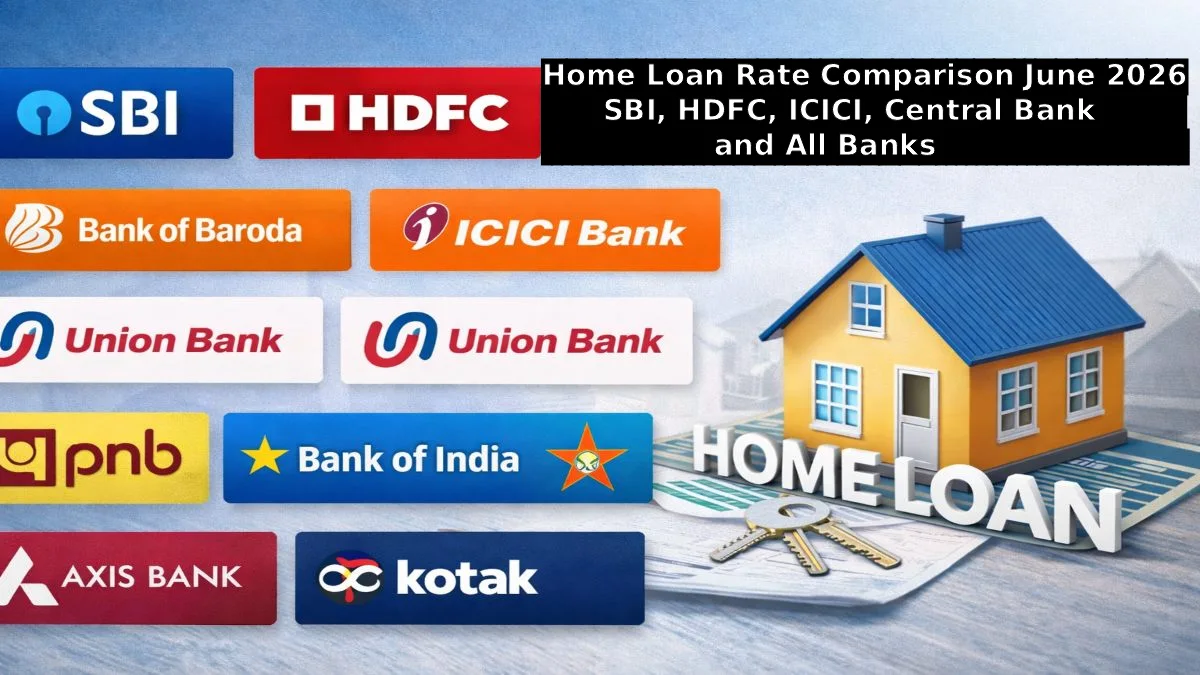
Before finalizing your home loan, it is always wise to compare interest rates and benefits across different banks. Here is a comparison of SBI home loan rates with other leading banks in India for women borrowers in 2026:
Key Observations
SBI offers the most competitive starting rate: At 7.25%, SBI's starting rate is among the lowest in the industry.
Bank of Baroda offers a unique advantage: BoB provides a 100% waiver on processing fees for women borrowers, which can save you a significant amount upfront.
SBI's processing fee is capped: The maximum processing fee of ₹10,000 + GST is very reasonable compared to other banks.
All major banks offer women concessions: Most leading banks now offer a 0.05% concession to women borrowers, making it a standard industry practice.
SBI's \"Her Ghar\" scheme: Under this scheme, home loans are offered to women applicants or first co-applicants who are women at a concessional interest rate.
How Women Can Get the Lowest SBI Home Loan Interest Rate
Securing the lowest possible interest rate requires careful planning and preparation. Here are actionable tips for women borrowers:
1. Improve Your CIBIL Score
Your CIBIL score is one of the most important factors determining your interest rate. SBI typically prefers a score of 750 or above for competitive rates.
How to improve your CIBIL score:
Pay all credit card bills and loan EMIs on time
Keep credit utilization below 30%
Avoid multiple loan applications in a short period
Check your credit report regularly for errors
CIBIL Score and Interest Rates:
| CIBIL Score | Interest Rate (% p.a.) |
|---|---|
| 800 and above | 7.25% – 7.50% |
| 750 – 799 | 7.50% – 7.75% |
| 700 – 749 | 7.75% – 8.00% |
| 650 – 699 | 8.00% – 8.25% |
| 550 – 649 | 8.25% – 8.50% |
2. Increase Your Down Payment
A larger down payment reduces the Loan-to-Value (LTV) ratio, which can help you secure a better interest rate.
Loan amount up to ₹30 lakh: LTV up to 90%
Loan amount ₹30 lakh – ₹75 lakh: LTV up to 80%
Loan amount above ₹75 lakh: LTV up to 75%
A premium of 10 bps (0.10%) is applicable for loan amounts up to ₹30 lakh with an LTV of more than 80% to 90%.
3. Add a Co-Applicant
Adding a co-applicant, especially a woman as the primary applicant, can help:
Increase the total income considered for eligibility
Improve the combined CIBIL profile
Avail the women's concession
4. Reduce Existing Debt
A lower debt-to-income ratio improves your creditworthiness. Before applying:
Pay off existing loans and credit card dues
Reduce your overall monthly obligations
Maintain a healthy financial profile
5. Maintain Stable Income
SBI prefers borrowers with stable income and employment:
Salaried women: 1–2 years of work experience
Self-employed women: 3+ years of business continuity
Provide consistent income tax returns
6. Choose the Right Loan Tenure
While a longer tenure means lower EMIs, it also means higher total interest. Choose a tenure that balances affordability with interest savings.
7. Check for Special Schemes
SBI offers special schemes that may provide additional benefits:
SBI Privilege Home Loan: Women government employees can get a combined 0.30% rate concession
SBI Shaurya Home Loan: For defence personnel, with interest concession for women applicants
SBI Her Ghar Scheme: Dedicated scheme for women applicants
8. Compare Before You Apply
Use BankerMart's comparison tools to check rates across different banks before finalizing your loan. Even a 0.05% difference can save you thousands over the loan tenure.
SBI Home Loan for Women: Advantages and Disadvantages
Every financial product has its strengths and limitations. Here is an honest look at the pros and cons of SBI home loans for women.
Advantages
Disadvantages
Who Should Apply for SBI Home Loan for Women?
SBI home loans for women are suitable for a wide range of borrowers. Here is who should consider applying:
Working Women
Salaried women with a stable job, regular income, and a good credit score are ideal candidates. Whether you work in the private sector or a government organization, SBI offers competitive rates tailored to your profile.
Government Employees
Women working in government departments are eligible for additional benefits. Under the SBI Privilege Home Loan scheme, government employees can get a combined concession of up to 0.30%.
Teachers
Teachers, especially those in government schools and colleges, are considered low-risk borrowers and may qualify for preferential rates.
Doctors and Medical Professionals
Doctors, dentists, and other medical professionals with a stable practice and consistent income are highly valued by SBI. They may qualify for higher loan amounts and better rates.
Entrepreneurs and Businesswomen
Self-employed women with a minimum of 3 years of business continuity can apply for SBI home loans. The bank evaluates business stability, profit records, and income tax returns to determine eligibility.
First-Time Homebuyers
First-time homebuyers are a priority for SBI, especially under the PMAY scheme. Mandatory female co-ownership in affordable housing segments makes this an attractive option for women buying their first home.
NRIs
Non-Resident Indians (NRIs) are also eligible for SBI home loans, though specific rules apply. The maximum age at maturity for NRIs is 60 years.
Senior Citizens
Senior citizens up to 70 years of age can apply, though the repayment tenure must end by age 70. An earning co-applicant may be required for approval.
Housewives
Housewives can apply for SBI home loans as co-applicants with their spouses or family members. While they may not have independent income, their inclusion as a co-owner can help in availing stamp duty benefits and tax advantages.
Frequently Asked Questions
1. What is SBI Home Loan Interest Rate for Women in 2026?
The SBI home loan interest rate for women in 2026 starts from 7.25% per annum. Women borrowers receive an additional 0.05% concession on the applicable rate, making the effective rate approximately 7.20% to 8.40% depending on the loan amount, CIBIL score, and other factors.
2. Does SBI provide interest concession for women?
Yes, SBI provides a 0.05% interest concession (5 basis points) to women borrowers. This concession is available to women who are the primary applicants or first co-applicants on the loan.
3. How much can women save on EMI?
On a ₹50 lakh loan for 20 years, women can save approximately ₹120 per month and about ₹28,800 in total interest over the loan tenure. For larger loans, the savings are proportionately higher. On a ₹1 crore loan, savings can be nearly ₹58,000 in total interest.
4. Can housewives apply for SBI home loan?
Yes, housewives can apply for SBI home loans as co-applicants with their spouses or family members. While they may not have independent income, their inclusion as a co-owner helps in availing stamp duty benefits and tax advantages.
5. Is female co-applicant mandatory?
No, a female co-applicant is not mandatory for an SBI home loan. However, having a woman as the primary applicant or first co-applicant makes you eligible for the 0.05% interest concession.
6. What CIBIL score is required for SBI home loan?
SBI typically prefers a CIBIL score of 750 or above for competitive interest rates. Scores below 750 may still be eligible but may attract higher rates.
7. What is the processing fee for SBI home loan?
The processing fee is 0.35% of the loan amount + GST, with a minimum of ₹2,000 + GST and a maximum of ₹10,000 + GST.
8. What is the maximum loan tenure for SBI home loan?
The maximum loan tenure is up to 30 years. The actual tenure depends on the applicant's age, with the loan needing to be repaid before the borrower turns 70.
9. Are there any prepayment charges on SBI home loan?
No, there are no prepayment or foreclosure charges on SBI floating-rate home loans.
10. Can NRIs apply for SBI home loan?
Yes, NRIs are eligible for SBI home loans, though specific rules apply. The maximum age at maturity for NRIs is 60 years.
11. What are the tax benefits for women on SBI home loan?
Women can claim tax deductions of up to ₹1.5 lakh under Section 80C (principal) and up to ₹2 lakh under Section 24(b) (interest) per financial year. With a joint loan, these benefits can be doubled.
12. Can I get stamp duty benefits as a woman borrower?
Yes, many states levy 1% to 2% lower stamp duty on properties registered in a woman's name. For example, a woman borrower in Delhi can save up to ₹1 lakh on a ₹50 lakh property.
13. What is PMAY subsidy for women?
Under PMAY 2.0, eligible borrowers can get interest subsidies of up to ₹1.80 lakh. Female co-ownership is mandatory in certain categories to avail these benefits.
14. Can I apply for SBI home loan online?
Yes, you can apply for an SBI home loan online through the SBI YONO app or the bank's official website.
15. What documents are required for SBI home loan for women?
Key documents include identity proof (Aadhaar, PAN), address proof, income proof (salary slips/IT returns), property documents, and employment documents.
16. Can senior citizens apply for SBI home loan?
Yes, senior citizens up to 70 years of age can apply. The loan must be repaid by age 70, and an earning co-applicant may be required.
17. What is the difference between SBI Regular Home Loan and SBI Maxgain?
SBI Regular Home Loan is a standard term loan, while SBI Maxgain offers an overdraft facility against the loan, allowing you to deposit surplus funds and reduce interest costs.
18. Can I transfer my existing home loan to SBI?
Yes, SBI offers balance transfer facilities, allowing you to transfer your existing home loan to SBI to avail of better rates and benefits.
19. What is the \"Her Ghar\" scheme by SBI?
SBI's \"Her Ghar\" scheme offers home loans to women applicants or first co-applicants who are women at a concessional interest rate.
20. How can I check my SBI home loan application status?
You can check your SBI home loan application status through the SBI YONO app, the bank's official website, or by visiting your nearest SBI branch.
21. What happens if the RBI repo rate changes?
Since SBI home loans are linked to the EBLR, which is based on the RBI repo rate, any change in the repo rate will affect your interest rate. Rates are typically reviewed quarterly.
22. Can a woman be a co-borrower without being a co-owner?
No, to claim tax benefits and be eligible for the women concession, the woman must be both a co-borrower and a co-owner of the property.
23. What is the EMI for a ₹30 lakh SBI home loan for women?
For a 20-year tenure at approximately 8.45%, the EMI would be approximately ₹25,977 per month. This is about ₹72 less than the regular rate EMI.
24. How does SBI determine the interest rate?
SBI determines the interest rate based on the EBLR + Credit Risk Spread formula. Factors include the RBI repo rate, the applicant's CIBIL score, income stability, employment type, and loan amount.
25. Can I get a top-up loan on my SBI home loan?
Top-up loans are available subject to certain conditions. However, they are not available for loan amounts of more than ₹2 crore and less than ₹20 lakh under the Overdraft category.
Conclusion
The SBI home loan interest rate for women 2026 presents a remarkable opportunity for women across India to fulfill their dream of owning a home. With interest rates starting as low as 7.25% per annum and an exclusive 0.05% concession for women borrowers, SBI has made homeownership more affordable than ever before.